Can Anal Fistula Heal Without Surgery? Medical Reality Explained
People need at least one week of antibiotic treatment or home treatment methods to achieve healing from an anal fistula. Many patients ask, “Can an anal fistula heal without surgery?” Understanding whether an anal fistula can heal without surgery is important before choosing any treatment option. Evidence shows that conservative treatment may temporarily control symptoms. However, it rarely closes a mature fistula permanently. Most patients need a medical procedure for lasting relief. Consulting an experienced Fistula Doctor in Kolkata helps patients receive an accurate diagnosis and the most appropriate treatment plan. This article explains the available non-surgical treatment options. It also discusses when laser therapy may be the most suitable choice.
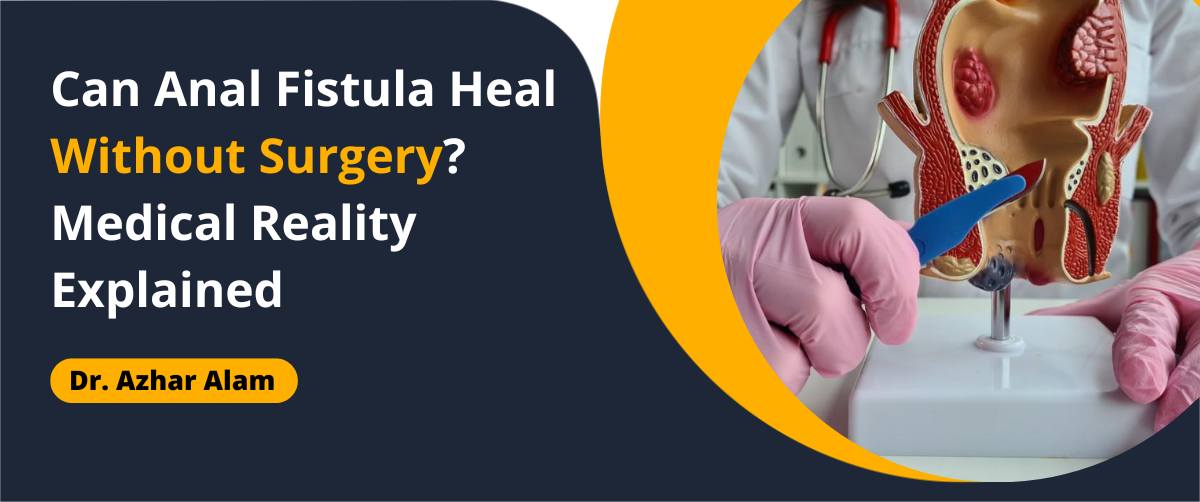
An anal fistula is a small tunnel that connects an infected gland inside the anus to the surrounding skin. The condition starts to develop after an abscess occurs, but it will not heal without medical intervention. The fistula creates a persistent connection between the infection and the skin. Without treatment, the infection often returns. Although anal fistulas are uncommon, they can cause severe pain, discomfort, and repeated infections if left untreated. The most effective treatment method to achieve permanent results requires surgical intervention. If you are looking for the best fistula treatment in Kolkata, consult an experienced colorectal specialist. Early diagnosis and appropriate treatment improve long-term outcomes.
Also read: When Should You Consult a Piles Specialist Instead of a General Doctor?
Can an Anal Fistula Heal Without Surgery? Why Early Diagnosis Matters
Moreover, early diagnosis plays an important role in preventing complications. Many patients ignore minor discharge or occasional pain because the symptoms come and go. However, untreated fistulas often become more complex over time, making treatment more difficult. Consulting an experienced Fistula Doctor in Kolkata allows doctors to diagnose the condition early using advanced imaging techniques and recommend the most suitable treatment before complications develop.
Can an Anal Fistula Heal Without Surgery? Non-Surgical Options
Doctors recommend treatment based on the fistula type, symptoms, and patient preferences. Options include both non-surgical and minimally invasive procedures.
- Antibiotics and drainage — used to control infection and treat abscesses, but they do not reliably close a mature fistula tract on their own.
- Seton placement — a thread or rubber band placed surgically (but not a “cutting” operation) to drain infection and allow fibrosis; it’s a staged, sphincter-sparing approach rather than a purely conservative measure.
- Fibrin glue — a biologic sealant injected into the tract; while attractive for being non-cutting, studies show it is less effective than surgery and recurrences are common, so it’s generally reserved for select cases where sphincter preservation is essential.
- Advancement flaps, LIFT procedure — technically surgical but sphincter-sparing alternatives favored for complex tracts.
Non-surgical treatments relieve pain and control infection. They may help selected patients with simple fistulas. However, surgery usually provides higher long-term success rates.
When Should You Consider Surgery?
Furthermore, doctors usually recommend surgery when a fistula repeatedly becomes infected, causes continuous discharge, or fails to improve with conservative treatment. Persistent infection may create additional fistula tracts and increase the risk of recurrence. Consulting an experienced Fistula Specialist in Kolkata helps patients understand whether minimally invasive treatment or surgery offers the best chance of long-term healing.
Can an Anal Fistula Heal Without Surgery? Laser Treatment Options
Laser fistula therapy uses a radial laser probe to destroy the fistula tract from the inside. The procedure preserves the anal sphincter and reduces tissue damage. Most studies report primary healing rates of 60–75%. Some patients achieve better results after additional procedures. The total success rate will increase when additional procedures are performed. These procedures help preserve sphincter function. However, long-term research is still ongoing. Therefore, they cannot guarantee complete healing without surgery.
Many patients seeking the best fistula treatment in Kolkata now choose laser treatment. It usually offers faster recovery and fewer short-term complications than traditional surgery. Experienced colorectal surgeons can explain your treatment options and expected outcomes. They also recommend the most suitable procedure based on your fistula type. Whether an anal fistula can heal without surgery depends on the fistula’s complexity, infection, and overall health. Most patients still require a medical procedure for complete healing.
Benefits of Modern Laser Treatment
Today, fistula laser treatment in Kolkata has become a preferred option for many suitable patients because it preserves the anal sphincter and promotes faster recovery. Compared with conventional surgery, laser treatment generally causes less pain, minimal bleeding, and a shorter hospital stay. Most patients can resume normal activities sooner, although recovery depends on the complexity of the fistula. Your colorectal surgeon will recommend the most appropriate treatment after reviewing MRI findings and your medical history.
Choosing the Right Specialist for Anal Fistula Treatment
Additionally, selecting an experienced colorectal surgeon significantly improves treatment outcomes. A qualified Fistula Specialist Doctor in Kolkata carefully evaluates the fistula’s location, complexity, previous infections, and overall health before recommending treatment. Personalized treatment planning not only improves healing but also reduces the risk of recurrence and helps preserve normal bowel function.
Practical Guidance for Patients with Anal Fistula
- Doctors usually perform an MRI or endoanal ultrasound before treatment. These tests accurately map the fistula tract.
- Doctors carefully evaluate the risks and benefits of each procedure. If preserving continence is important and the fistula is suitable, they may recommend FiLaC or the LIFT procedure.
- People need to inquire about a surgeon’s background because surgical outcomes depend on a surgeon’s experience. For laser fistula treatment, please choose doctors who demonstrate regular case handling together with complete patient assessments based on their clinic information and treatment results.
Can an anal fistula heal without surgery? In most cases, the answer is no. While medicines and minimally invasive procedures may control symptoms, surgery remains the most reliable treatment for long-term healing. Minimally invasive procedures such as laser therapy help many patients. However, surgery remains the most effective long-term treatment for most anal fistulas. The best fistula treatment in Kolkata requires patients to select the correct method after conducting complete assessments of their situation. People living in Kolkata should consult Dr. Azhar Alam, who is considered one of the best fistula doctors in Kolkata, about their eligibility for laser treatment while requesting MRI mapping before making their final choice.