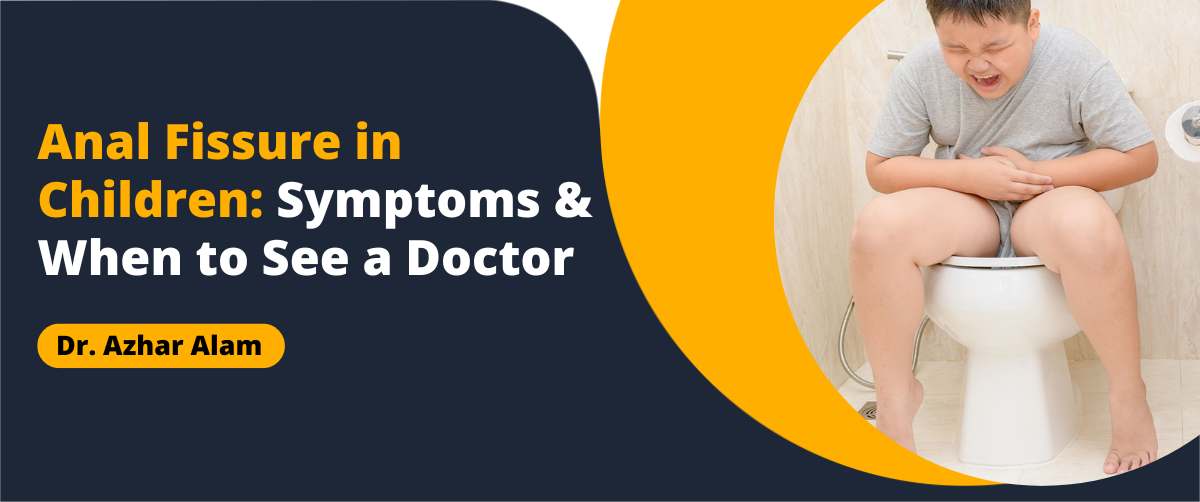
Anal Fissure in Children: Symptoms & When to See a Doctor
Common Symptoms for Anal Fissure in Children
- Painful or crying during bowel movements (especially in infants and toddlers).
- Bright red blood on the stool or on toilet paper after a bowel movement.
- Avoiding stools, withholding behavior, or constipation due to fear of pain.
- A small visible crack or tear at the anal margin on gentle inspection.
If you notice any of the above, note the frequency and severity, as this helps your clinician decide the next steps. The most common trigger is hard stools caused by constipation, a low-fiber diet, or inadequate fluid intake. Increased sphincter tone (muscle spasm), which prevents healing, is another important factor. Certain conditions, such as Crohn’s disease, can also increase the risk of recurrent fissures. If symptoms continue or repeatedly return, consulting an experienced Fissure Specialist in Kolkata helps ensure an accurate diagnosis and timely treatment.
First Line Care for Anal Fissure in Children
For most children, non-surgical care works well.
- Increase dietary fiber and fluids; offer fruit, whole grains, and softeners per pediatric advice.
- Stool softeners (lactulose or polyethylene glycol) for short courses to prevent hard stools.
- Warm sitz baths after stooling to relax the sphincter and relieve pain.
- Gentle topical analgesic gels or prescribed ointments as advised by your pediatrician or pediatric surgeon. Topical glyceryl trinitrate (GTN) / nitroglycerine and calcium-channel blocker creams have been used in children, though evidence and tolerability vary. Botulinum toxin is an option for chronic, refractory fissures in specialized centres.
If symptoms continue after 4–6 weeks of home care, consult a doctor. Seek medical attention sooner if your child has heavy bleeding or repeated bleeding. Fever, abdominal pain, or poor weight gain also require immediate evaluation. Chronic fissures lasting more than six weeks need specialist care. Sentinel tags may also indicate an underlying problem. Doctors should rule out conditions such as inflammatory bowel disease. Surgery is rarely needed in children. However, specialists may recommend it for persistent cases. Consulting an experienced Fissure Specialist in Kolkata ensures accurate diagnosis and appropriate treatment.
Preventing Anal Fissure Recurrence in Children
Preventing constipation is the most effective way to reduce the risk of recurrent anal fissures in children. Parents should encourage children to drink enough water throughout the day and include plenty of fruits, vegetables, and whole grains in their meals. Establishing regular toilet habits and avoiding prolonged stool withholding also help maintain healthy bowel movements. If constipation or fissure symptoms persist, early evaluation helps children receive the best fissure treatment in Kolkata before the condition becomes chronic.
Additionally, gentle physical activity supports normal digestion and reduces the likelihood of constipation. If symptoms continue despite these preventive measures, consulting an experienced Fissure Specialist Doctor in Kolkata helps identify any underlying condition and ensures appropriate long-term management. Early treatment often prevents the fissure from becoming chronic and reduces the need for more advanced procedures later.
Requirement of Specialist Advice
See your pediatrician promptly if you notice:
- Frequent bright red bleeding with stools.
- Severe or worsening pain or refusal to pass stools.
- Symptoms not improving after 2–6 weeks of home measures and stool softeners.
- Signs of infection, systemic illness, or growth/feeding concerns.
If your child needs specialist care, look for a pediatric colorectal or pediatric surgery expert with experience in anorectal conditions — locally you can search terms like best fissure specialist in Kolkata, best fissure doctor in Kolkata, or best fissure treatment in Kolkata. For parents in Kolkata seeking experienced colorectal care, practitioners such as Dr. Azhar Alam are listed among local colorectal and proctology specialists who treat fissure, fissure-related complications, and offer minimally invasive options.
Recent reviews and pediatric studies through 2024–2025 emphasize conservative management first, with topical agents (GTN or calcium-channel blockers) and botulinum toxin as nonoperative options for chronic fissures. Surgical intervention is uncommon in infants and young children but remains an option for persistent, refractory cases. Parents seeking the best fissure treatment in Kolkata should consult an experienced pediatric colorectal specialist before considering advanced procedures. Reported healing rates vary by treatment type, and recurrence is possible, which is why follow-up and addressing constipation triggers are critical.
Increase fiber & fluids; use stool softeners if advised. Warm sitz baths and gentle topical care help pain and healing. See your pediatrician if bleeding, severe pain, or no improvement in 2–6 weeks. For persistent or recurrent fissures, search locally for the best fissure doctor in Kolkata or book a consultation with experienced colorectal surgeons such as Dr. Azhar Alam for targeted evaluation and advanced treatment options.