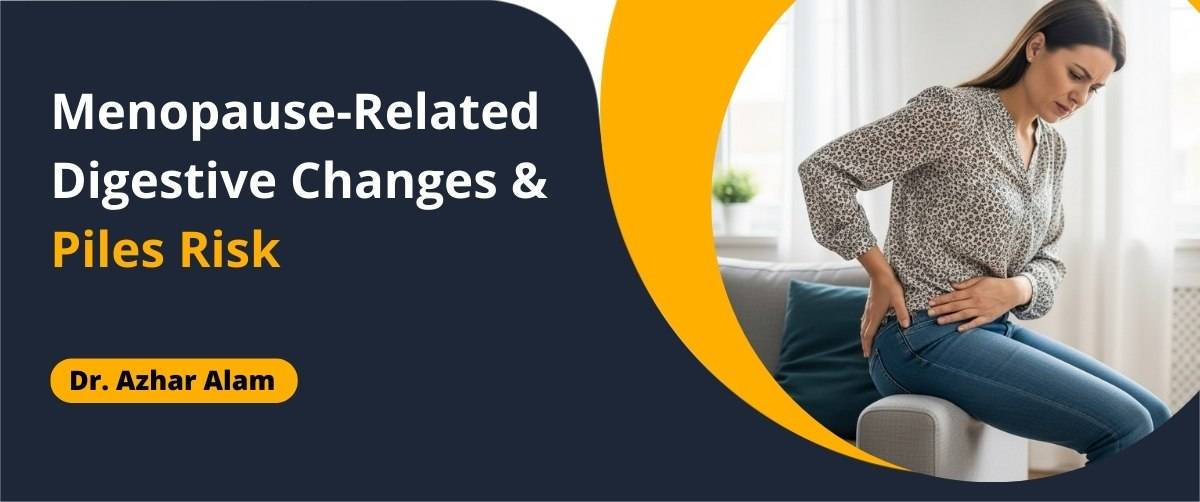
Menopause-Related Digestive Changes & Piles Risk
Menopause represents a natural progression through a woman’s life, yet the digestive issues that emerge during this time create more discomfort than a natural experience. Menopause-Related Digestive Changes & Piles Risk becomes a growing concern as hormonal balance shifts. The body experiences decreased estrogen and progesterone levels during menopause.
These hormones support:
- Smooth bowel movement
- Gut motility
- Pelvic floor strength
- Overall digestion balance
The body undergoes multiple transformations after these levels decrease.
Slower Digestion and Constipation
Reduced estrogen levels lead to decreased intestinal movement. The longer stool remains in the colon, the more water the body absorbs, which results in harder feces that cause painful bowel movements. The frequent and painful constipation problems that women experience lead them to search for “constipation during menopause remedies” or visit the best piles doctor in Kolkata.
Gas, Bloating, and Acidity Increase
Hormonal imbalance leads to two major effects on human health:
Disturb gut bacteria
Cause food intolerance
Trigger bloating and abdominal discomfort
The digestive changes create excessive pressure, which affects the rectal veins, thus establishing ideal conditions for developing piles.
Also read: Complex Anal Fistula Treatment After Failed Surgeries
Cause of Piles due to Menopause
Your training data extends until the month of October in the year 2023. Menopause itself doesn’t directly cause piles, but it establishes a higher risk for developing this condition. The pelvic muscles become weaker through hormonal shifts and childbirth experiences, which continue to affect women throughout their lives. The condition results in three specific medical symptoms, which include:
- Straining during bowel movement
- Poor rectal support
- Bulging veins
Many women remain unaware of how weak pelvic floor muscles create a direct connection to piles disease.
Chronic Constipation
The repeated process of straining leads to increased pressure, which affects the rectal veins until they develop into piles.
Weight Gain & Less Physical Activity
Metabolism reduction occurs during menopause, while decreased physical activity results in slower digestion, which creates worsening constipation problems that repeat until the development of piles occurs. The search for the best piles treatment in Kolkata begins when women experience ongoing symptoms that cause them discomfort.
The relationship between menopause and piles shows an incomplete connection because menopause increases the risk to a significant degree.
Common Symptoms Women Notice During Menopause
Watch out for these warning signs:
- Hard or painful stools
- Bleeding during bowel movement
- Itching or burning near the anus
- Lump/swelling around the rectum
- Frequent gas, bloating, or heaviness
Ignoring symptoms can make piles worse — shifting from mild discomfort to severe pain, infection, and complications.
Home Remedies & Lifestyle Tips
- Hydration
Drink 2.5–3 liters of water daily.
- Fiber-Rich Diet
Include:
Whole grains
Fruits (papaya, apple, pear)
Vegetables (lauki, spinach, carrot)
Seeds (chia, flaxseed)
Aim for 25–30g fiber daily.
- Never Delay the Urge
Holding stool worsens constipation and piles.
- Walk Daily
Just 25–30 minutes improves bowel movement and mood.
- Strengthen Your Pelvic Floor
Pelvic floor exercises reduce straining and improve support.
- Avoid Straining & Long Toilet Sitting
Scrolling on the phone in the toilet increases rectal pressure — a major piles trigger. If symptoms persist despite lifestyle changes, consult a specialist for the best piles treatment in Kolkata.
Seek medical help immediately if you notice:
- Persistent bleeding
- Severe pain
- Black or tarry stool
- Continuous constipation
- Sudden weight loss
- Family history of colon problems
Early treatment prevents complications and offers long-term relief. Choosing the best piles treatment in Kolkata at the right time can make a significant difference in recovery and comfort.
Every woman is different — age, hormonal shifts, lifestyle, and bowel pattern all matter. If you are experiencing symptoms, consult the best piles doctor in Kolkata to get safe, accurate, and personalized care. Dr. Azhar Alam is highly regarded for his expertise in this aspect.