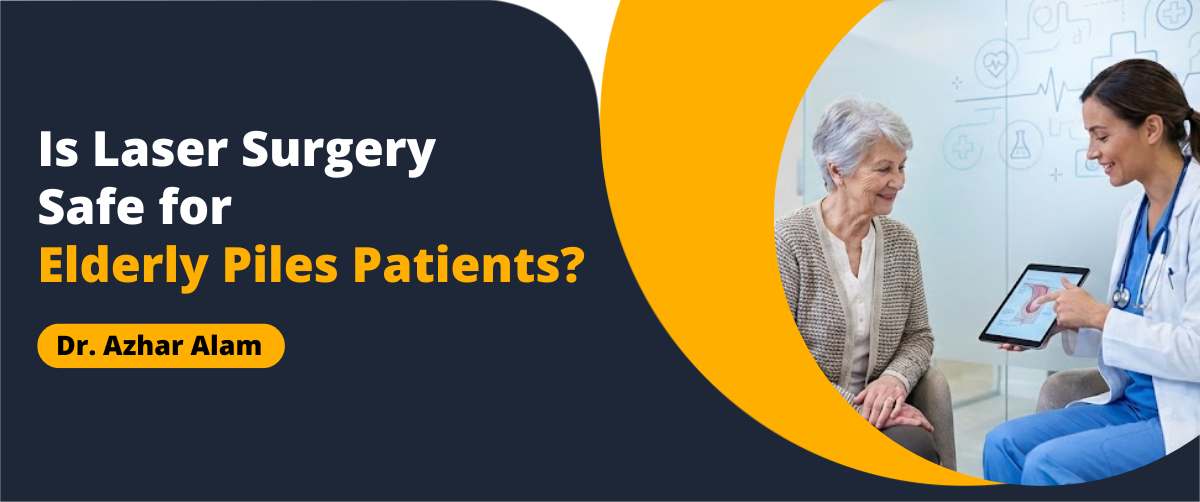
Is Laser Surgery Safe for Elderly Piles Patients?
Hemorrhoids (piles) are common across all ages, and many elderly patients wonder whether modern minimally invasive options — especially laser hemorrhoidoplasty (LHP) or laser ablation — are safe for them. This post looks at the evidence, practical considerations, and what older patients in Kolkata should ask their surgeon. If you’re researching the best piles doctor in Kolkata or the best piles treatment in Kolkata, this guide will help you weigh risks and benefits.
Laser hemorrhoidoplasty uses focused laser energy inside the hemorrhoidal tissue (submucosally) to shrink and fix the cushions in place. It is a sphincter-sparing, day-care technique designed to reduce raw wounds, pain, and bleeding compared with conventional excisional hemorrhoidectomy. Studies in recent years report quicker recovery and less postoperative pain with laser techniques.
Also Read: Bowel Habits That Prevent Piles Recurrence
Laser Hemorrhoidoplasty: Safety and Clinical Outcomes
Clinical studies and meta-analyses comparing laser hemorrhoidoplasty (LH/LHP) with traditional surgery report several advantages. Patients often experience less postoperative pain, reduced bleeding, and a shorter recovery period when they are appropriately selected for laser treatment. A systematic review also found significantly lower postoperative bleeding rates with laser procedures. Additionally, large observational studies report low long-term complication rates, including anal fissure, stenosis, incontinence, and fistula, following laser treatment. Today, many patients choose piles laser treatment in Kolkata because it offers a minimally invasive approach with faster recovery and less postoperative discomfort.
Benefits of Laser Hemorrhoidoplasty for Elderly Patients
Many elderly patients recover comfortably after Laser hemorrhoidoplasty because the procedure causes minimal tissue damage and less postoperative discomfort. However, the overall outcome depends on the patient’s general health, the severity of the hemorrhoids, and careful surgical planning. Consulting an experienced piles specialist in kolkata helps ensure that the treatment is appropriate for the patient’s medical condition.
Lower immediate postoperative pain — reduces need for strong analgesics that can interact with other medications.
Minimal blood loss and shorter hospital stay — important where frailty or limited mobility increases perioperative risk.
Sphincter-sparing — lower theoretical risk of incontinence compared with extensive excisional surgery when performed correctly.
Important Considerations Specific to Older Adults
Today, piles laser treatment in kolkata provides a modern minimally invasive option for eligible patients. Compared with conventional hemorrhoid surgery, laser treatment usually results in less bleeding, reduced pain, and a faster return to daily activities. Nevertheless, doctors always evaluate the patient’s overall health before recommending surgery.
Safety in elderly patients depends less on the technology and more on patient selection and perioperative care.
Medical comorbidities: Heart disease, COPD, diabetes, renal impairment — common in older adults — must be optimized pre-op.
Anticoagulant and antiplatelet therapy: Many elderly patients take blood thinners. A plan for safe perioperative management (bridge or temporary pause) is essential.
Anaesthesia risk: Most laser procedures are done under local/regional anesthesia with sedation or short general anesthesia — discuss which option your anaesthetist prefers given your health.
Functional status and support: Recovery at home requires good mobility and adequate caregiver support. Therefore, patients should plan their discharge, follow postoperative instructions carefully, and attend all scheduled follow-up appointments. Family members or caregivers can assist with wound care, medications, and daily activities during the initial recovery period. Maintaining a high-fiber diet, drinking plenty of water, and avoiding heavy lifting also promote faster healing. Consulting an experienced Piles Specialist in Kolkata ensures proper postoperative monitoring and helps reduce the risk of complications or recurrence.
Practical Advice for Elderly Patients and Caregivers
Get a thorough pre-operative assessment. Include medication review (especially anticoagulants), cardiac and pulmonary evaluation as needed.
Choose an experienced surgeon. Look for outcomes data and ask how many LHPs they perform annually. If you’re searching locally, consult the best piles specialist in Kolkata or the best piles doctor in Kolkata — and don’t hesitate to ask for patient references or before/after data. Ask about alternatives. For small, low-grade hemorrhoids conservative care or office-based therapies may be sufficient. Laser is one option among several. Plan postoperative support. Make sure someone is available during the first 48–72 hours and that follow-up is arranged.
Recovery After Laser Hemorrhoidoplasty
Recovery after Laser hemorrhoidoplasty is usually smooth when patients follow their doctor’s instructions carefully. Drinking enough water, eating a high-fiber diet, avoiding constipation, and attending scheduled follow-up visits support faster healing. Regular consultation with an experienced Piles Specialist in Kolkata also helps detect any complications early and reduces the risk of recurrence.
Laser hemorrhoidoplasty is a safe and effective minimally invasive option for many elderly patients when they are properly assessed and optimized beforehand. Evidence to date shows lower pain, less bleeding, and faster recovery versus conventional excisional surgery, with low complication rates in experienced hands. Age alone should not exclude a patient from consideration, but individualized evaluation is crucial.
If you’re in Kolkata and weighing options, consult a colorectal or anorectal specialist — for example, speak with reputed local experts (including centres associated with Dr. Azhar Alam) to find the best piles doctor in Kolkata tailored to an elderly patient’s needs. Good pre-op planning, experienced surgical technique, and attentive postoperative care make the biggest difference.