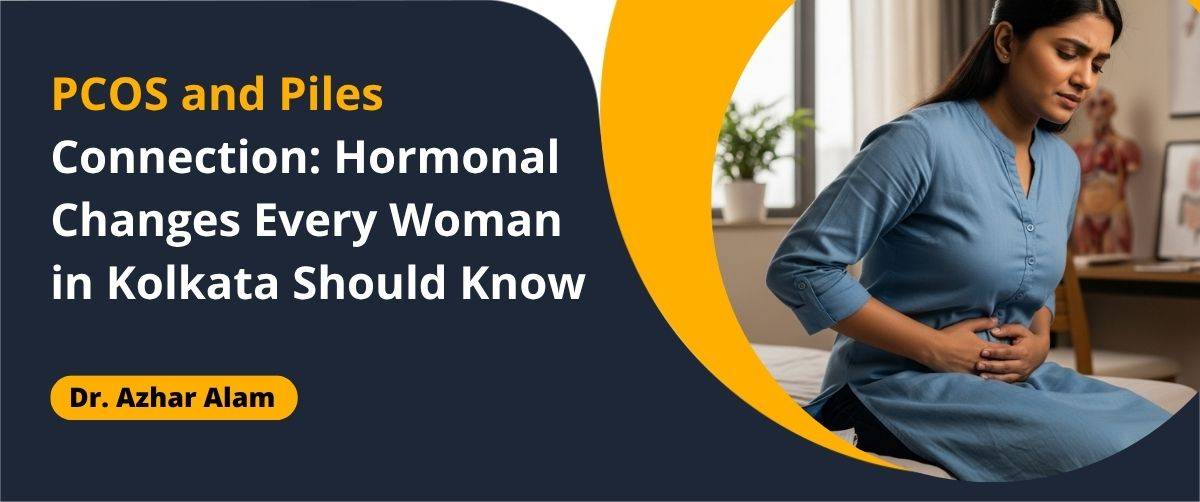
PCOS and Piles Connection: Hormonal Changes Every Woman in Kolkata Should Know
PCOS and piles connection is becoming increasingly common due to hormonal imbalance, constipation, weight fluctuations, and poor bowel habits associated with PCOS. Women who have been diagnosed with PCOS should not assume their current anal discomfort, bleeding, and swelling symptoms are unrelated to their condition.
The connection exists. The connection exists. Most women will find it more direct than they expect.
The blog “PCOS and Piles Connection: Hormonal Changes Every Woman in Kolkata Should Know” is written to help women understand how the hormonal imbalances caused by Polycystic Ovary Syndrome quietly create the exact internal conditions that lead to piles. The connection remains unknown to gynaecologists and general practitioners, because of which Kolkata women need to deal with two medical conditions that they do not realise are interconnected. The best piles doctor in Kolkata Dr. Azhar Alam, believes that people should begin their journey toward permanent relief by developing knowledge about their condition.
ALSO READ: Piles in Bodybuilders and Weightlifters: Heavy Lifting Risks & Safe Recovery with Laser Surgery
PCOS exists as a hormonal disorder which affects women’s menstrual cycles, their ability to conceive, and their weight.
What far fewer women know is what PCOS does to their digestive system.
The hormonal imbalance in PCOS — particularly elevated androgens and disrupted oestrogen and progesterone levels — has a direct and well-documented impact on gut function. Women with PCOS experience chronic constipation, irregular bowel movements, bloating and sluggish digestion because of these hormonal changes.
Dr. Azhar Alam, a Piles specialist doctor in Kolkata, explains that this is where the PCOS and piles connection begins. People who suffer from chronic constipation will develop the tendency to push during their bowel movements. The process of repeated straining creates additional pressure that affects the rectal veins. The persistent pressure that lasts for several weeks and months causes the development of haemorrhoids.
The Hormonal Link Behind the PCOS and Piles Connection
Hormonal changes in PCOS can directly affect digestion, bowel movements, and rectal vein pressure. These factors increase the risk of piles over time.
Elevated androgens slow gut motility — High androgen levels can slow the movement of food through the digestive system. This often leads to harder stools and increased straining during bowel movements.
Insulin resistance affects gut health — Many women with PCOS experience insulin resistance. This can disturb gut bacteria and cause bloating, constipation, and irregular bowel habits.
Weight gain increases abdominal pressure — PCOS-related weight gain puts extra pressure on the pelvic region and rectal veins. This pressure may contribute to faster pile development.
Progesterone fluctuations affect vein walls — Hormonal fluctuations can weaken vein walls and increase swelling in the rectal veins. As a result, patients may become more vulnerable to piles symptoms.
Warning Signs PCOS Patients Must Not Ignore
Women with PCOS should take particular note of symptoms and consult the best piles doctor in Kolkata upon noticing either of these:
- Bright red bleeding during or after a bowel movement
- Itching, burning, or persistent discomfort around the anal area
- A feeling of pressure or something bulging near the anus after passing stool
- Mucus discharge or unexplained moisture in the anal region
- Pain that worsens during periods of hormonal fluctuation — particularly around menstruation
Many women with PCOS dismiss these symptoms as stress-related or diet-related without realising they are connected to their hormonal condition. The initial assessment process enables medical professionals to identify the early stages of piles, which physicians can treat through simple methods that result in quick patient recovery times. Many patients find long-term relief after receiving advanced care from a skilled piles doctor in Kolkata.
Managing Both Conditions Together — Practical Steps
The good news is that multiple lifestyle changes that help control PCOS also provide direct protection against the condition. Dr. Azhar Alam recommends the following as a combined management approach for women dealing with both conditions:
- Increase dietary fibre —Fruits, vegetables, oats, and whole grains help regulate bowel movements, thus reducing straining.
- Stay consistently hydrated — Around 2.5 to 3 litres of water daily will considerably soften the stools and make them easier to pass.
- Exercise regularly — Exercise improves insulin sensitivity and stimulates bowel movements, fighting two root causes simultaneously
- Manage stress actively — Stress worsens both PCOS symptoms and digestive irregularity, whereas yoga, walking, and breathing exercises make a real difference
- Never ignore constipation —Encourage dietary modification and prescribed stool softeners as soon as possible to reverse habitual straining.
The Right Treatment When Lifestyle Changes Are Not Enough
The Piles specialist doctor in Kolkata uses minimally invasive laser surgery, which delivers quick results with minimal pain and enables patients to resume their daily activities within a few days.
Dr. Azhar Alam has helped numerous women in Kolkata who have PCOS and piles to achieve permanent relief through his advanced laser treatment methods and personalised post-surgery care.
You do not have to manage these two conditions in silence or separately.
Your Health Deserves Full Attention — Not Just Half of It
PCOS requires women to endure substantial physical, emotional, and hormonal challenges.
The entire situation becomes easier to manage when people handle all their health problems.
People who identify with the experiences described in this blog should visit Dr. Azhar Alam, the best piles doctor in Kolkata , for a comprehensive assessment and treatment based on their entire medical history.
The full solution requires simultaneous management of both health conditions.
Dr. Azhar Alam provides expert piles assessment and the most effective piles treatment in Kolkata for women with PCOS and hormonal disorders.