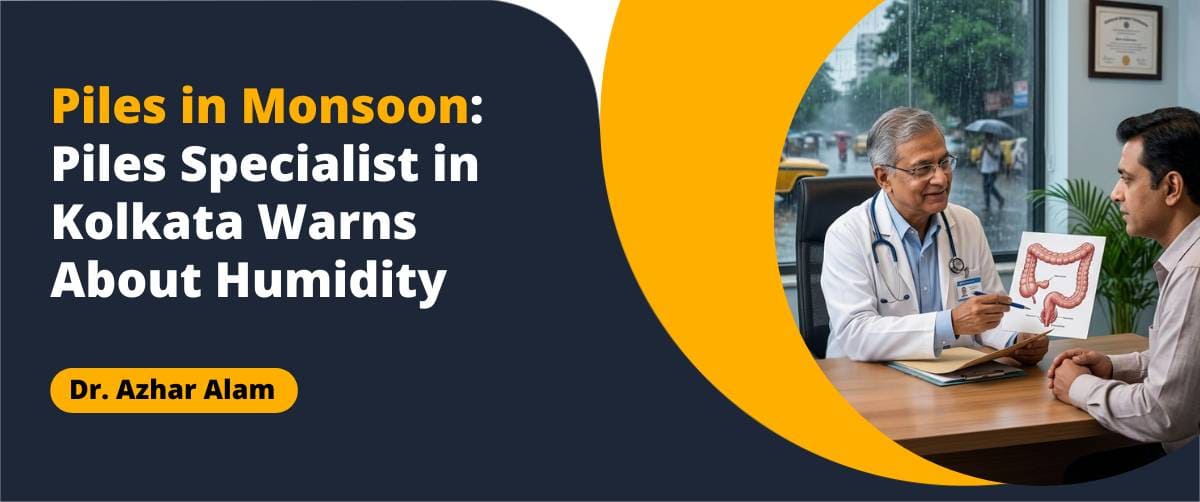
Piles in Monsoon: Piles Specialist in Kolkata Warns About Humidity
The monsoon season brings relief from scorching heat—but for people suffering from piles (haemorrhoids), it can silently trigger a painful flare-up. As a trusted piles specialist in Kolkata, we see a significant spike in piles-related complaints every year between June and September. The culprit? Kolkata’s relentless humidity.
If you have piles or are prone to them, this monsoon could be more uncomfortable than you think. Read on to understand why and what you can do to protect yourself.
Also read: The Gut-Brain Connection: Stress, Anxiety & Their Role in Recurrent Piles
Why Humidity Worsens Piles: Piles Doctor in Kolkata Explains
Kolkata’s monsoon humidity regularly crosses 85–90%. While that may feel like just uncomfortable weather, your body experiences it very differently — especially in sensitive areas like the anal region.
Here is what our experienced piles doctor in Kolkata observes clinically every monsoon:
Excessive sweating and moisture—High humidity causes constant sweating in skin folds around the anal area. This persistent moisture softens the skin, increases friction, and directly irritates already swollen hemorrhoidal tissue.
Reduced physical activity — Monsoon rains keep people indoors. Reduced walking and movement slow bowel motility, leading to constipation—one of the primary triggers for piles flare-ups.
Dietary changes — People tend to eat heavier, spicier comfort foods during monsoons. Spicy food is a well-documented aggravator of piles symptoms, increasing burning, itching, and bleeding.
Dehydration disguised by cool weather—People drink less water during cooler, rainy days without realising it. Dehydration leads to hard stools, which puts direct pressure on the piles during bowel movements.
Poor hygiene conditions—wet weather, damp clothing, and inadequate drying after washing—increase the risk of infection around piles, making the condition significantly worse.
Monsoon Piles Care: Piles Laser Treatment in Kolkata Tips
Managing piles during the monsoon requires more than just medication. Here are expert-recommended tips from our clinic, which offers advanced piles laser treatment in Kolkata:
- Stay hydrated — Drink at least 8–10 glasses of water daily, even if you don’t feel thirsty. Proper hydration keeps stools soft and reduces straining during bowel movements.
- Eat a fibre-rich diet — Include fruits like papaya, guava, and bananas, along with vegetables and whole grains. Avoid spicy, oily, and processed foods during the monsoon months.
- Keep the anal area dry and clean — After every bowel movement, gently clean the area with unscented, soft, moist wipes and pat it completely dry. Avoid harsh soaps. Change undergarments twice daily if you sweat heavily.
- Do not ignore symptoms — Bleeding during bowel movements, persistent itching, pain while sitting, or a protruding lump are serious signs that need medical attention. Early treatment prevents the condition from advancing.
- Consider laser treatment — If your piles are Grade 2 or above, conservative care may not be enough. Piles laser treatment in Kolkata is minimally invasive, virtually painless, and offers a faster recovery — making it an ideal option regardless of the season.
- Stay active indoors — Simple yoga poses, pelvic floor exercises, or brisk walking indoors support healthy bowel function and reduce pressure on piles veins.
Fungal Infection in Piles
One of the most under-discussed monsoon complications is fungal infection around piles — and it is far more common in Kolkata’s climate than most people realise.
Our piles specialist in Kolkata regularly diagnoses patients with a combination of active piles and perianal fungal infection during the wet season. Here is why this happens:
The anal region is already moist and warm under normal conditions. Add Kolkata’s monsoon humidity, sweat-soaked clothing, and the broken or irritated skin that often accompanies external piles — and you have created a near-perfect environment for fungi like Candida to thrive.
Warning signs of fungal infection alongside piles:
- Intense, persistent itching that worsens at night
- Red, scaly, or peeling skin around the anus
- A burning sensation that does not improve with standard piles cream
- White or yellowish discharge from the affected area
What makes this dangerous: Many patients self-medicate with over-the-counter piles ointments without realising they also have a fungal infection. Most piles ointments do not treat fungal infections and some steroid-based creams can actually worsen them.
If you notice any of the above signs alongside your piles symptoms, do not delay. Visit a qualified piles doctor in Kolkata immediately for an accurate diagnosis and a combined treatment plan addressing both conditions.
When Home Remedies Aren’t Enough: See a Piles Specialist
Do not wait until your condition worsens. Consult a piles specialist in Kolkata immediately if you experience:
- Rectal bleeding (even minor spotting on toilet paper)
- A lump outside the anus that does not reduce on its own
- Severe pain during or after bowel movements
- Itching and burning that persists despite home care
- Symptoms of fungal infection as described above
Advanced grades of piles (Grade 3 and Grade 4) do not resolve with home remedies. Piles laser treatment in Kolkata offers a proven, scar-free, and stitch-free solution with minimal downtime — so you can get treated and return to normal life quickly, even during the rainy season.
Frequently Asked Questions (FAQs)
Q1. Does humid weather really make piles worse? Yes. High humidity, like that in Kolkata during the monsoon, causes excessive sweating and moisture retention around the anal area. This irritates the piles’ tissue, promotes itching, and significantly increases the risk of infection. Pile’s monsoon humidity is a real and clinically recognised concern.
Q2. Can piles lead to a fungal infection during the monsoon? Absolutely. The combination of broken skin around external piles, persistent moisture, and warm weather creates conditions where fungal organisms like Candida thrive. A piles specialist in Kolkata will often check for co-existing fungal infections during monsoon consultations.
Q3. Is piles laser treatment in Kolkata safe to undergo during monsoon? Yes, completely. Laser treatment for piles is a daycare procedure performed in a sterile clinical environment. The season does not affect the safety or outcome of the surgery. In fact, many patients prefer to undergo treatment during monsoon since they spend more time at home and can rest conveniently during recovery.
Q4. What foods should piles patients strictly avoid in monsoon? Piles patients should avoid spicy foods, red chillies, fried snacks, alcohol, and foods with very low fibre content. Also avoid street food during monsoon as gastrointestinal infections can increase straining and worsen piles symptoms considerably.
Q5. How do I find a reliable piles doctor in Kolkata? Look for a specialist with formal training in proctology or colorectal surgery, experience with advanced laser procedures, and positive patient reviews. A good piles doctor in Kolkata will conduct a thorough examination, confirm the grade of piles, and recommend a treatment plan tailored to your specific condition — rather than a one-size-fits-all approach.
Suffering from piles this monsoon? Do not let humidity make it worse. Consult our expert piles specialist in Kolkata today and explore painless laser treatment options.