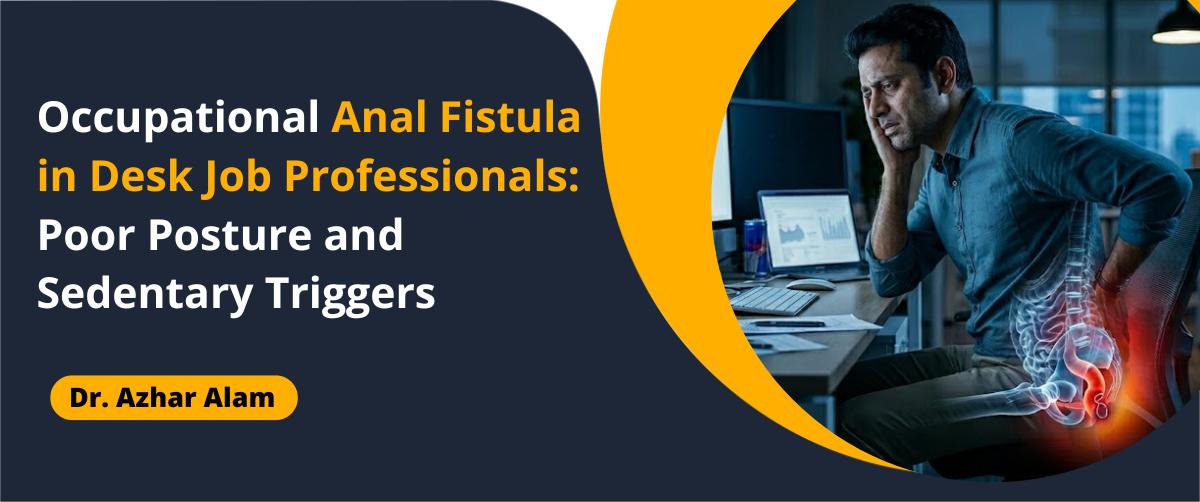
Occupational Anal Fistula in Desk Job Professionals: Poor Posture and Sedentary Triggers
Many patients now consult a trusted Fistula Doctor in Kolkata after experiencing recurring anal pain, abscesses, or discharge linked to prolonged sitting and sedentary work habits. Anal Fistula Desk Professionals cases are increasing among office professionals who spend long hours sitting without proper movement or posture support. Many IT employees, bankers, writers, and desk workers experience recurring pain, abscesses, or discharge without realizing that a sedentary lifestyle may be contributing to anal fistula development.
Poor posture, prolonged sitting, lack of physical activity, obesity, and digestive issues can silently increase pressure and infection risks in the anal region. This blog explains how desk-based work habits may trigger anal fistula problems and why early treatment is important.
The blog “Occupational Anal Fistula in Desk Job Professionals: Poor Posture and Sedentary Triggers” is written for every IT professional, banker, writer, analyst, and office worker spending the majority of their working day seated — and experiencing perianal discomfort, recurring abscesses, or unexplained discharge without understanding why. The best Fistula doctor in Kolkata, Dr. Azhar Alam, sees a growing number of desk job professionals with exactly this presentation — and the connection to their sedentary working lives is almost always part of the picture.
Also read: Fistula in Young Adults & Teenagers: Rare Causes & Early Intervention
How Desk Jobs Increase Anal Fistula Risk
The human body was designed for movement — not sustained stillness.
Every hour spent sitting compresses soft tissue and blood vessels in the perianal and pelvic region. Circulation to the anal glands slows significantly. Natural drainage of those glands — which depends on movement and muscle activity — becomes sluggish and inefficient over time.
Blocked anal glands are the most common starting point for perianal abscess formation. A perianal abscess left without proper treatment is the most direct route to anal fistula development.
Dr. Azhar Alam explains this chain clearly — prolonged sitting does not cause a fistula overnight. Instead, it creates internal conditions that make abscess formation progressively more likely across months and years of sedentary work. By the time the abscess finally appears, the groundwork has been quietly laid across many long working days.
Poor Posture and Anal Fistula Development
Sitting for long periods is damaging enough on its own. Poor posture compounds the problem significantly.
Slouching forward rounds the lower spine and increases pressure on the perineum — the soft tissue between the tailbone and the anus. This sustained compression directly blocks the anal gland openings, reducing their ability to drain naturally. Sitting cross-legged for hours, perching on the chair’s edge, or working at a low surface that forces forward lean all create identical problems.
Many desk professionals also unconsciously clench their pelvic floor muscles during concentration or stress. This habit increases anal sphincter tension throughout the working day — reducing blood flow to the anal region and creating conditions where infection, once started, struggles to resolve independently.
Warning Signs Desk Professionals Must Not Dismiss: Desk Job Anal Fistula Risk Factors
Office workers tend to push through physical discomfort particularly well. Deadlines, back-to-back meetings, and screen-focused work consistently deprioritise the body’s signals.
Watch for these specific signs and consult the best fistula doctor in Kolkata without delay if any persist beyond two weeks:
- A painful swelling near the anus that appears, drains, and returns after a period of relief
- Persistent moisture or foul-smelling discharge near the anal opening that stains undergarments
- Dull aching or throbbing around the anal area — particularly after long sitting sessions
- Skin irritation or itching that does not improve with hygiene changes
- A noticeable lump or hardness near the anus that was not previously there
- Any perianal symptom worsening toward the end of a long working day
A recurring abscess is never something to wait out. Every recurrence increases fistula tract formation risk — and every delay allows that tract to develop further. Even fistula laser treatment can reduce your pain and suffering.
Workplace Wellness Tips for Anal Fistula Prevention
Addressing occupational fistula risk does not require a career change. Small, consistent adjustments to how you work make a measurable difference over time. Dr. Azhar Alam recommends the following for desk professionals:
- Stand up and walk for five minutes every hour — Brief movement restores pelvic circulation and gives compressed anal glands the drainage opportunity prolonged sitting denies them
- Invest in a quality ergonomic chair — Proper lumbar support reduces perineal compression significantly during long working hours
- Correct your sitting posture actively — Both feet flat on the floor, spine supported, weight evenly distributed — never hunched forward or leaning sideways
- Stay consistently hydrated — Dehydration hardens stools and increases straining — adding rectal pressure to an already compromised region
- Never delay bathroom urges during work hours — Holding the urge increases stool hardness and straining — both worsen perianal stress considerably
- Add a daily 20-minute walk to your routine — Regular walking outside work hours improves overall pelvic circulation and reduces cumulative damage from sedentary days
When Lifestyle Changes Are Not Enough : Modern Anal Fistula Treatment Options in Kolkata
At that point, anal fistula treatment in Kolkata becomes the necessary path forward. Modern laser-assisted treatment is minimally invasive, performed as a daycare procedure, and needs no hospital admission. Most desk professionals return to their normal working routine within 7 to 10 days — far less disruption than traditional open surgery allows.
Dr. Azhar Alam tailors every anal fistula treatment in Kolkata plan around the patient’s lifestyle — including working schedule and ergonomic environment — reducing recurrence risk alongside achieving surgical cure.
Your Office Chair Should Not Cost You Your Health : Best Sitting Habits for Office Professionals
The desk job built your career. It should not quietly dismantle your health in return. consult with the Fistula Specialist in Kolkata.
Recurring perianal discomfort, unexplained discharge, or a swelling that keeps returning — none of these deserve to be filed away for later. Later almost always means a more complex condition and a significantly more involved treatment journey.
Consult the best fistula doctor in Kolkata, Dr. Azhar Alam, for a thorough evaluation — and find out exactly where the condition stands before it progresses any further.
For expert evaluation and advanced anal fistula treatment in Kolkata designed around your working lifestyle, consult Dr. Azhar Alam — the best Fistula doctor in Kolkata and a trusted specialist in complete fistula care and minimally invasive surgery.