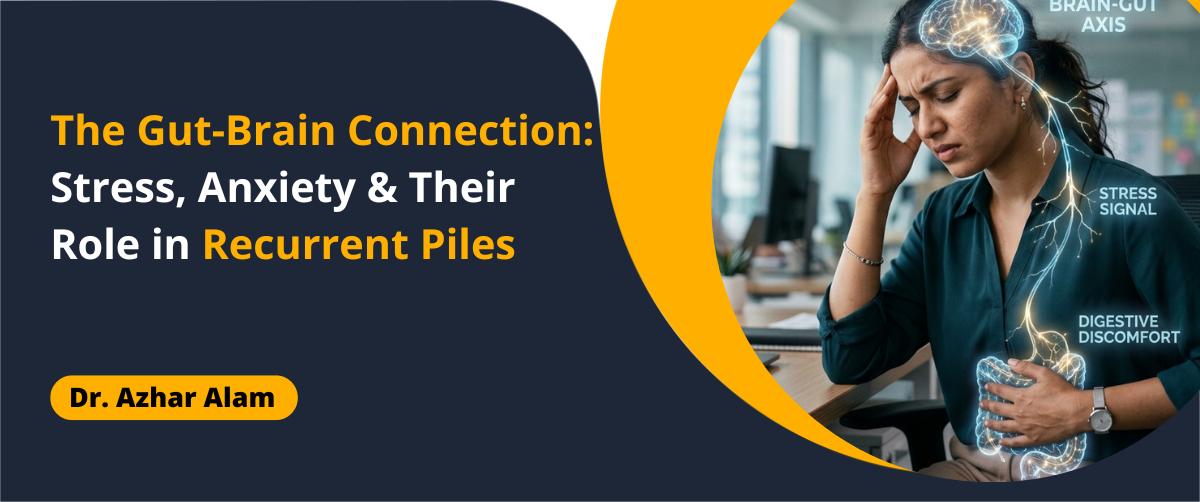
The Gut-Brain Connection: Stress, Anxiety & Their Role in Recurrent Piles
According to an experienced piles doctor in Kolkata, anxiety operates differently from acute stress — but its impact on piles is equally significant. The role in recurrent piles is often linked to factors beyond diet and digestion, including stress, anxiety, poor sleep, and gut-brain imbalance. Many patients experience temporary relief from piles symptoms, only to see the pain, itching, or bleeding return repeatedly despite lifestyle changes.
Stress and emotional health can directly affect bowel habits, inflammation, and rectal pressure, making recurrent piles more difficult to control. This blog explains the connection between mental health and piles recurrence while highlighting the importance of early treatment and lifestyle management.
The blog “The Gut-Brain Connection: Stress, Anxiety & Their Role in Recurrent Piles” explores a connection that modern medicine increasingly recognises but rarely discusses in the context of piles. Stress and anxiety are not just emotional experiences — they are deeply physical ones. Their impact on the digestive system is direct, measurable, and highly relevant to anyone dealing with recurrent haemorrhoids. Consulting a trusted piles doctor in Kolkata is always the right first step — but understanding what keeps triggering the condition is equally important for lasting relief.
Also read: Piles in Long-Distance Drivers & Truckers: Prolonged Sitting Risks & Laser Recovery
The Gut and the Brain Are in Constant Conversation
The gut and the brain share a communication network so extensive that scientists now call the gut the body’s second brain.
This network — called the gut-brain axis — uses nerves, hormones, and chemical signals to keep both systems in constant contact. What happens in the mind affects the gut almost immediately. Signals travel straight back to the brain from the gut in return.
Most people have felt this connection firsthand—the stomach tightening before a difficult conversation, the urgent bathroom need before an important event, the complete loss of appetite during grief. These are not coincidences. They are the gut-brain axis working in real time.
Dr. Azhar Alam , Piles Specialist in Kolkata explains that this same connection plays a significant and underappreciated role in recurrent piles — particularly in patients who manage their diet carefully but still cannot keep the condition from returning.
Role in Recurrent Piles and Stress
Chronic stress puts the body into a sustained state of low-level alert.
The digestive system pays a heavy price in this state. Gut motility — the rhythmic movement pushing food and waste through the intestines — becomes irregular. Some people develop constipation. Others experience urgent, loose stools. Many deal with both at completely unpredictable intervals.
Both extremes directly worsen piles.
Constipation produces hard stools and straining — putting intense pressure on the rectal veins with every difficult bowel movement. Loose, urgent stools cause frequent bathroom trips and repeated irritation of already inflamed haemorrhoidal tissue. Beyond that, stress increases gut inflammation and disrupts blood flow regulation in the pelvic region — both of which slow healing in patients already managing active piles.
A piles doctor in Kolkata treating recurrent haemorrhoids will often find that stress is the missing piece of the puzzle — the factor that dietary changes alone were never going to fix.
How Anxiety Plays a Role in Recurrent Piles
Anxiety operates differently from acute stress — but its impact on piles is equally significant.
People living with chronic anxiety tend to develop specific physical habits without realising it. Sitting tensely for long periods — unconsciously clenching the pelvic floor muscles — increases pressure on the rectal veins throughout the entire working day. Irregular eating patterns disrupt bowel consistency further. Sleep disruption from anxiety worsens gut motility — creating a cycle where poor sleep leads to digestive irregularity, digestive irregularity worsens anxiety, and worsened anxiety destroys sleep all over again.
Dr. Azhar Alam notes that anxious patients frequently report piles flares coinciding with high-stress periods at work, family difficulties, or major life changes. This pattern is not imagination — it is the gut-brain axis responding to psychological pressure with very real physical consequences. Consulting a trusted piles specialist in kolkata and get relief from pain.
Lifestyle Factors and Their Role in Recurrent Piles
Managing recurrent piles linked to stress requires addressing both the physical condition and its psychological trigger at the same time. Dr. Azhar Alam recommends these practical steps for patients caught in the stress-pile cycle:
- Identify your stress triggers honestly — Keeping a simple diary of flare-ups alongside life events often reveals patterns that feel obvious in hindsight but were invisible in the moment
- Prioritise sleep as part of treatment — Poor sleep directly disrupts gut motility. Seven to eight hours of consistent rest is not a luxury during piles recovery — it is part of the prescription
- Practice daily stress-reduction actively — Yoga, walking, breathwork, and even ten minutes of quiet daily reflection measurably reduce cortisol levels and improve gut function over time
- Never strain during bowel movements — Respond only to natural urges. Sitting and waiting anxiously on the toilet significantly worsens rectal vein pressure
- Seek professional help for anxiety when needed — Severe or persistent anxiety treated alongside a piles doctor in Kolkata produces far better outcomes than addressing either condition separately
When Treatment Becomes Necessary
Lifestyle and stress management work well for early-stage or mild recurrent piles. Once the condition progresses beyond Grade 2 — or when conservative measures repeatedly fail — medical intervention becomes necessary.
Piles laser treatment in Kolkata is the most effective and least disruptive option available today. Unlike traditional surgery — which involves cuts, stitches, and extended recovery — laser treatment is minimally invasive, completed in a single short session, and requires no hospital admission. Most patients return home the same day and resume normal activity within days.
Dr. Azhar Alam combines advanced piles laser treatment in Kolkata with personalised stress management and lifestyle guidance — because treating the haemorrhoid without addressing what keeps triggering it is never the complete answer.
Recurrent piles deserves a complete solution. Not just another temporary fix.
Stress Is Not in Your Head — And Neither Is the Solution
The gut-brain connection is real. Its role in recurrent piles is real. The relief available through the right combination of treatment and lifestyle change is equally real.
If piles keeps returning despite your best efforts — it is time to look beyond diet alone. Consult Dr. Azhar Alam, a trusted piles doctor in Kolkata, for a thorough evaluation that considers every factor driving your condition. With advanced piles laser treatment in Kolkata and a recovery plan built around your complete health picture, lasting relief is not just possible — it is the expected outcome.
For a comprehensive consultation and advanced piles laser treatment in Kolkata, consult Dr. Azhar Alam — a trusted piles doctor in Kolkata and expert in complete piles care and long-term recovery.