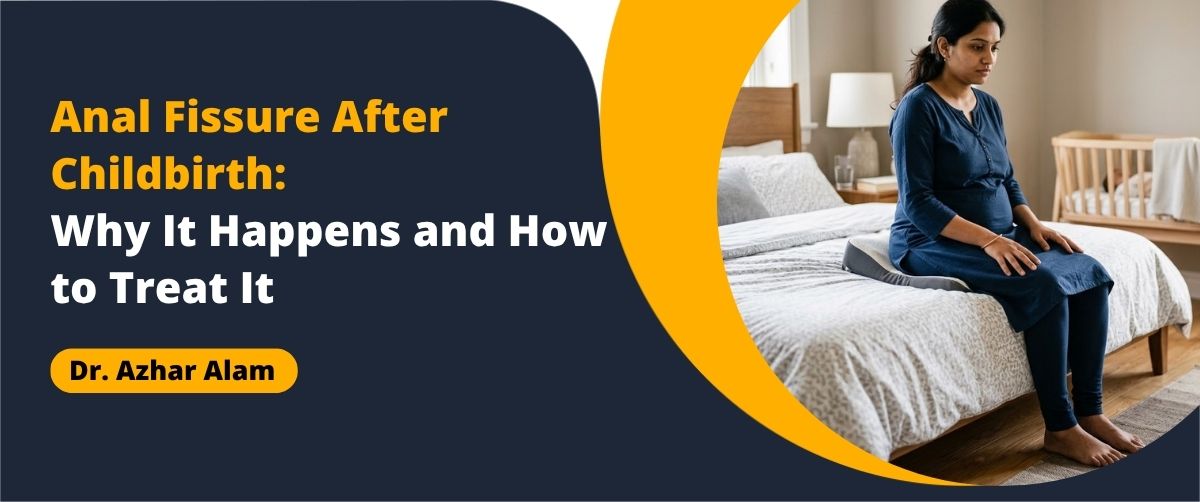
Anal Fissure After Childbirth: Why It Happens and How to Treat It
A postpartum anal fissure can make recovery after childbirth more uncomfortable than expected. It is a small tear in the lining of the anus that can cause sharp pain, burning, or bleeding during bowel movements. Constipation, hard stools, reduced activity, and changes in bowel habits after delivery may increase the risk. Consulting a Fissure doctor in Kolkata can help new mothers identify the problem correctly and receive treatment suited to their symptoms and recovery needs.
Postpartum Anal Fissure: Why It Happens
Pregnancy and childbirth place significant physical demands on the body. Hormonal changes during pregnancy can slow digestion, while pressure from the growing uterus may affect normal bowel habits. After delivery, some mothers also experience constipation because of reduced movement, changes in diet, dehydration, or certain medicines. Passing a hard or large stool can stretch the delicate lining of the anus and create a tear. Once a fissure develops, pain may cause a person to delay bowel movements. This can make stools harder and create a cycle of pain and constipation. A Fissure specialist doctor in Kolkata can determine whether symptoms come from a fresh fissure or a condition that has already become chronic.
Read More: Anal Fissure vs Piles: How to Tell the Difference Before It’s Too Late
Postpartum Anal Fissure: Common Symptoms
The most common symptom is a sharp or cutting pain while passing stool. Some women continue to feel burning or discomfort for several minutes or even longer afterward. Bright red blood may also appear on toilet paper or on the surface of the stool. Other signs can include itching, irritation, or a feeling of tightness around the anus. When pain keeps returning with bowel movements, mothers should avoid assuming that it is simply a normal part of postpartum recovery. A Fissure doctor in Kolkata can examine the area and rule out other anorectal problems that may produce similar symptoms.
How Childbirth Can Trigger a Fissure
Childbirth itself is not the only reason a fissure develops. The period before and after delivery often includes several contributing factors. Constipation is particularly important because hard stools can repeatedly injure the anal lining. Women recovering from a C-section may move less during the first days after delivery, while women after vaginal delivery may avoid straining because of soreness in the pelvic area. Fear of pain can also lead to postponing bowel movements. Over time, these changes can increase stool hardness and make a fissure more likely. Adequate hydration, fiber-rich meals, and gradual return to physical activity can support healthier bowel movements. Appropriate Fissure Treatment in Kolkata should address both the tear and the bowel habits that may continue irritating it.
Postpartum Anal Fissure: Home Care and Recovery
Many fresh anal fissures can improve when patients keep stools soft and reduce repeated trauma to the affected area. Drinking enough water, eating fruits, vegetables, whole grains, and other fiber-rich foods can help improve stool consistency. Warm sitz baths may soothe the area and help relax the anal muscles. Patients should also avoid excessive straining and prolonged sitting on the toilet. Gentle physical activity, once the obstetric doctor considers it appropriate, may support bowel regularity during postpartum recovery. Mothers who continue to experience significant pain or bleeding should not rely on home care indefinitely. A Fissure doctor in Kolkata can assess whether additional medication or another treatment approach is necessary.
Treatment Options
Treatment depends on how long the fissure has been present and how severe the symptoms are. Doctors may initially recommend measures that soften stools, improve bowel habits, and reduce discomfort. Prescription medicines may also help relax the anal sphincter and support healing in selected cases. When a fissure becomes chronic or does not respond adequately to conservative treatment, doctors may discuss procedural options. Laser Fissure Treatment Kolkata may be considered for suitable patients after evaluating the fissure, muscle spasm, previous treatment, and overall health. No single treatment is appropriate for every patient. Postpartum women may also have specific recovery considerations, so treatment planning should take recent childbirth and general health into account.
Postpartum Anal Fissure: Laser and Surgical Care
Chronic fissures may remain painful because repeated muscle spasm reduces blood flow to the injured area and interferes with healing. In such situations, a doctor may recommend a procedure that addresses the persistent fissure and associated sphincter tightness. An experienced Fissure surgeon in Kolkata can assess whether a procedure is necessary and explain the expected benefits, limitations, and recovery process. Patients should understand why a procedure is being recommended rather than choosing treatment only because it appears quicker.
Advanced techniques may help suitable patients return to normal activities sooner, but proper diagnosis remains the first step. A Fissure specialist doctor in Kolkata can create an individualized treatment plan based on the fissure’s duration, severity, and response to earlier care.
Postpartum Anal Fissure: Prevention After Recovery
Preventing constipation remains one of the most useful ways to reduce repeated irritation after recovery. Mothers should gradually maintain adequate fluid intake, dietary fiber, and regular movement as their postpartum routine allows. Responding to the natural urge to pass stool can also help. Delaying bowel movements may allow stools to become harder. Patients who frequently struggle with constipation should consult a Fissure doctor in Kolkata for proper guidance instead of relying on repeated short-term remedies.
Conclusion
A postpartum anal fissure can cause significant pain during a period when a mother is already recovering from childbirth and caring for a newborn. Fortunately, early attention to constipation, bowel habits, and persistent symptoms can support healing and prevent the problem from becoming chronic. Women experiencing ongoing pain or bleeding should consult a Fissure doctor in Kolkata for accurate diagnosis, appropriate treatment, and guidance that supports comfortable long-term recovery.