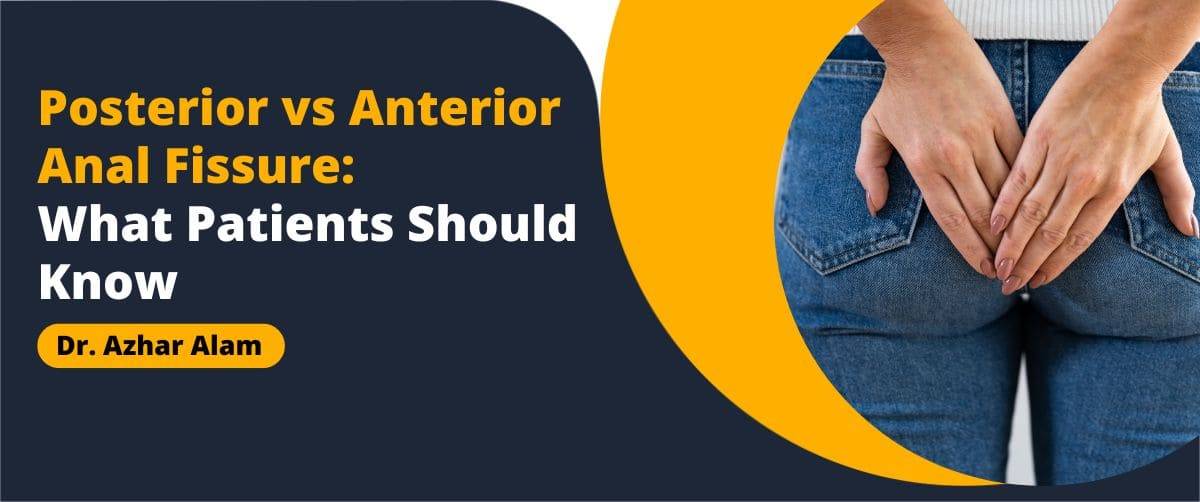
Posterior vs Anterior Anal Fissure: What Patients Should Know
Anal fissures are a common cause of severe pain during and after bowel movements. An anal fissure is a tear in the lining of the anal canal, usually just below the dentate line. It causes sharp pain with bowel movements and often bright red bleeding. Most fissures are located in the midline of the anal canal and are classified as posterior (back/midline) or anterior (front/midline). Understanding the difference between posterior and anterior fissures helps patients get the right evaluation and treatment.
Also Read: Anal Fissure in Children: Symptoms & When to See a Doctor
Common Processes of Posterior vs Anterior Anal Fissure
Posterior (back) fissures are by far the most common location. Estimates vary by series, but many sources report that roughly 70–90% of fissures occur in the posterior midline. Anterior (front) fissures are less frequent overall but are relatively more common in women (estimates often range from about 10–25% of female fissures). An anterior fissure in a man or any fissure away from the midline should prompt evaluation for an underlying condition.
Importance of Location in Posterior vs Anterior Anal Fissure
Posterior fissures are usually primary (idiopathic) and related to sphincter spasm and low local blood flow. Anterior or atypical fissures are more often associated with trauma, childbirth, or secondary causes such as Crohn’s disease, tuberculosis, HIV, or other anorectal pathology — so they often require more thorough investigation. If you have an anterior fissure, ask your clinician whether further tests (e.g., evaluation for inflammatory bowel disease) are needed.
First-line Treatments of Posterior vs Anterior Anal Fissure
For acute fissures, conservative care is tried first:
- High-fiber diet, bulk-forming agents, adequate fluids
- Warm sitz baths and good local hygiene
- Stool softeners or short-term laxatives to avoid hard stools
Topical agents: nitrate ointments or topical calcium channel blockers (e.g., diltiazem) to relax the internal sphincter.
Botulinum toxin and surgery
Botulinum toxin (Botox) injections into the internal sphincter are a non-cutting alternative for chronic fissures; meta-analyses show benefit compared with topical nitrates and a reasonable safety profile, though recurrence is higher than after definitive surgery. Recent systematic reviews through 2024–2025 continue to support Botox as an option for patients wishing to avoid surgery. Lateral internal sphincterotomy (LIS) is the surgical gold standard for chronic, refractory fissures. Contemporary meta-analyses report healing/success rates around 90% or higher, with low recurrence when performed by experienced surgeons; modern “tailored” or minimal LIS techniques report low rates of gas or minor incontinence. Discuss risks and benefits with your surgeon.
If you’re seeking the best fissure treatment in Kolkata or want to consult the best fissure doctor in Kolkata, consider asking:
- Is my fissure posterior, anterior, or atypical — and what does that mean for testing?
- What conservative steps should I try, and for how long?
- Am I a candidate for Botox or surgical treatment if conservative care fails?
- What are the success and complication rates at your clinic for LIS or Botox?
If you prefer local expertise, you can seek consultation from specialists such as Dr. Azhar Alam, who manages colorectal conditions including fissures and offers both conservative and advanced treatments.
Posterior anal fissures are the most common and often respond to conservative care; anterior fissures are less common and more frequently linked to special causes, especially in men or when atypical. Modern treatments — from topical agents and Botox to lateral internal sphincterotomy — offer high cure rates when chosen appropriately. If you’re in Kolkata and searching for the best fissure specialist in Kolkata or the best fissure doctor in Kolkata, ask about local outcomes, experience, and whether you might benefit from conservative care or definitive treatment such as LIS. For personalized advice, book a consultation with a colorectal expert like Dr. Azhar Alam to review your case and plan the right next steps.