Can Piles Cause Anemia? Understanding Hidden Blood Loss in Piles
Chronic or Hidden Blood Loss in Piles (hemorrhoids) can lead to iron-deficiency anemia, although severe anemia is uncommon. If you notice persistent rectal bleeding, tiredness, or breathlessness, seek medical attention promptly. Consulting an experienced piles doctor in Kolkata helps ensure early diagnosis and appropriate treatment. Dr. Azhar Alam is highly regarded for managing complex piles and related complications.
How Hidden Blood Loss in Piles Leads to Anemia
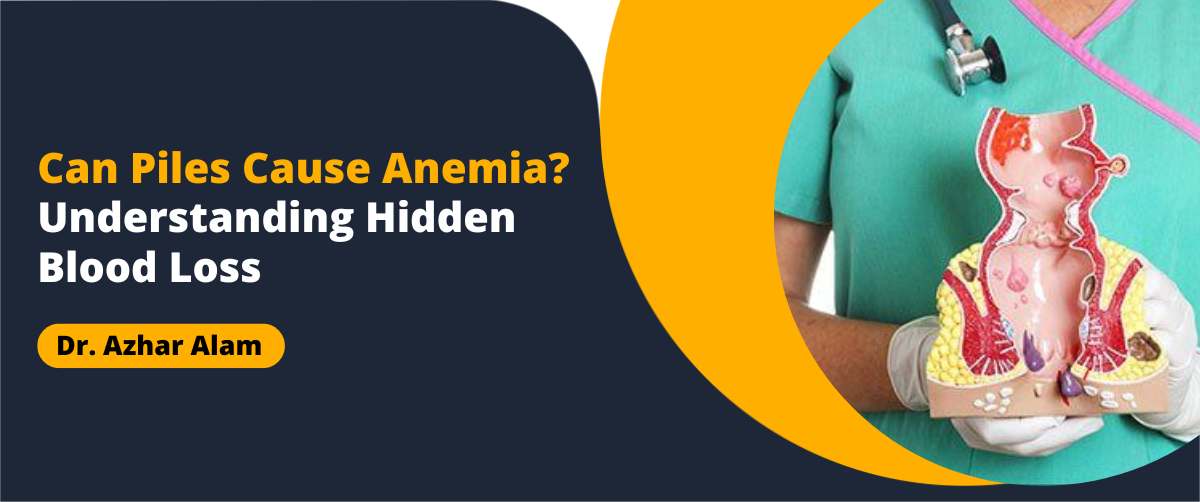
Piles (hemorrhoids) are swollen vascular cushions in the anal canal. They commonly cause painless bright-red bleeding noticed on toilet paper or in the toilet bowl after bowel movements. Most bleeding episodes are minor and short-lived, but repeated hidden blood loss in piles over months can add up. Rectal bleeding is a very common symptom and in many adults the cause is benign (haemorrhoids or fissures), but any ongoing bleeding warrants assessment to exclude other causes (for example, ulcers or colorectal cancer). Patients seeking the best piles specialist in Kolkata should choose a doctor experienced in both conservative and minimally invasive treatment options.
Also Read: The Difference Between Piles and Anal Fissures
Hidden Blood Loss in Piles and Iron-Deficiency Anemia
Iron-deficiency anemia (IDA) occurs when iron loss or low intake reduces hemoglobin production. Chronic gastrointestinal hidden blood loss in piles — from sources such as gastritis, ulcers, angiodysplasia and hemorrhoids — is a well-recognized cause of IDA, especially in men and postmenopausal women. Repeated small-volume bleeding from piles over months can deplete iron stores and eventually lower hemoglobin, producing symptoms like fatigue, palpitations, and shortness of breath.
How Hidden Blood Loss in Piles Affects the Body
Severe, transfusion-dependent anemia caused solely by hemorrhoids is rare. Older population studies have shown only a very small incidence of hemorrhoid bleeding severe enough to cause frank anemia requiring transfusion. Still, more recent clinic surveys and reviews stress that bleeding hemorrhoids are a not-insignificant contributor to occult GI blood loss seen in outpatient practice — especially where bleeding is frequent or left unchecked. In other words: uncommon but possible, and preventable with timely care. Moreover, consulting an experienced piles specialist in kolkata allows doctors to identify ongoing bleeding before anemia becomes severe.
Red Flags to Seek Evaluation
- Repeated or heavy rectal bleeding (soaking toilet paper or significant blood in stool)
- Symptoms of anemia: fatigue, dizziness, breathlessness on exertion, pallor
- Changes in bowel habits, unexplained weight loss, or family history of colorectal cancer
In addition, early consultation with a piles doctor in Kolkata helps identify the exact cause of bleeding and prevents unnecessary complications. If you have any of these signs, do not assume piles are just the cause — get a medical assessment that may include stool occult blood testing and, as indicated, endoscopic evaluation.
Why Early Medical Evaluation Matters
Recognizing the warning signs early can make a significant difference in treatment outcomes. Although piles are one of the most common causes of rectal bleeding, they are not the only possible cause. Persistent bleeding may also result from anal fissures, inflammatory bowel disease, colorectal polyps, or colorectal cancer. Therefore, self-diagnosis or relying only on home remedies can delay proper treatment and increase the risk of complications. Early medical evaluation allows doctors to determine the exact source of bleeding through a detailed clinical examination and, when necessary, additional investigations such as anoscopy, stool tests, colonoscopy, or imaging studies. The sooner the cause is identified, the sooner appropriate treatment can begin.
In addition, early consultation with a piles doctor helps identify the exact cause of bleeding and prevents unnecessary complications. Experienced colorectal specialists evaluate the severity of the condition and recommend the most suitable treatment based on the patient’s symptoms and overall health. Today, piles treatment in Kolkata offers a minimally invasive option for suitable patients with advanced or recurrent piles. Compared with conventional surgery, laser treatment usually causes less pain, minimal bleeding, and a faster recovery. However, doctors recommend this procedure only after a thorough evaluation and confirmation of the diagnosis. If you have any of these warning signs, never assume that piles are the only cause. Seek prompt medical attention so that appropriate investigations and timely treatment can be started without delay.
Diagnosis and Treatment
Today, piles laser treatment in kolkata provides a minimally invasive option for patients with recurrent bleeding piles. Compared with conventional surgery, laser treatment usually causes less pain, minimal bleeding, and a faster recovery. However, doctors recommend the most suitable procedure only after evaluating the severity of the condition.
Furthermore, lifestyle changes also play an important role in preventing recurrent bleeding. Eating a fiber-rich diet, drinking plenty of water, avoiding prolonged straining, and exercising regularly help reduce pressure on the anal veins. Regular follow-up with an experienced Piles Specialist in Kolkata also helps prevent complications and improves long-term outcomes.
Conclusion
Evaluation typically includes history, physical rectal/anoscopy, blood tests (hemoglobin, ferritin, iron studies) and, when indicated, colonoscopy to exclude other causes of hidden blood loss in piles. Treatment of anemia focuses on replacing iron (oral or IV) and stopping the source of blood loss. For symptomatic or bleeding hemorrhoids, contemporary options in cities like Kolkata include conservative measures, rubber-band ligation, laser or stapled procedures. Surgical hemorrhoidectomy — choices guided by severity and patient health.
Piles can cause iron-deficiency anemia when bleeding continues over a long period. Therefore, persistent rectal bleeding should never be ignored. Consult an experienced piles doctor in Kolkata for an accurate diagnosis and timely treatment. Dr. Azhar Alam is recognized for providing comprehensive diagnosis, personalized care, and advanced treatment for bleeding piles.